The usual tricks, and what catches them
| Paper sheet or fixed QR | Im Here! with Verify | |
|---|---|---|
| Signing in a friend | An extra name written on the sheet. | Still possible from a second phone or a private browser tab. A quick head count against the count on the board catches it. |
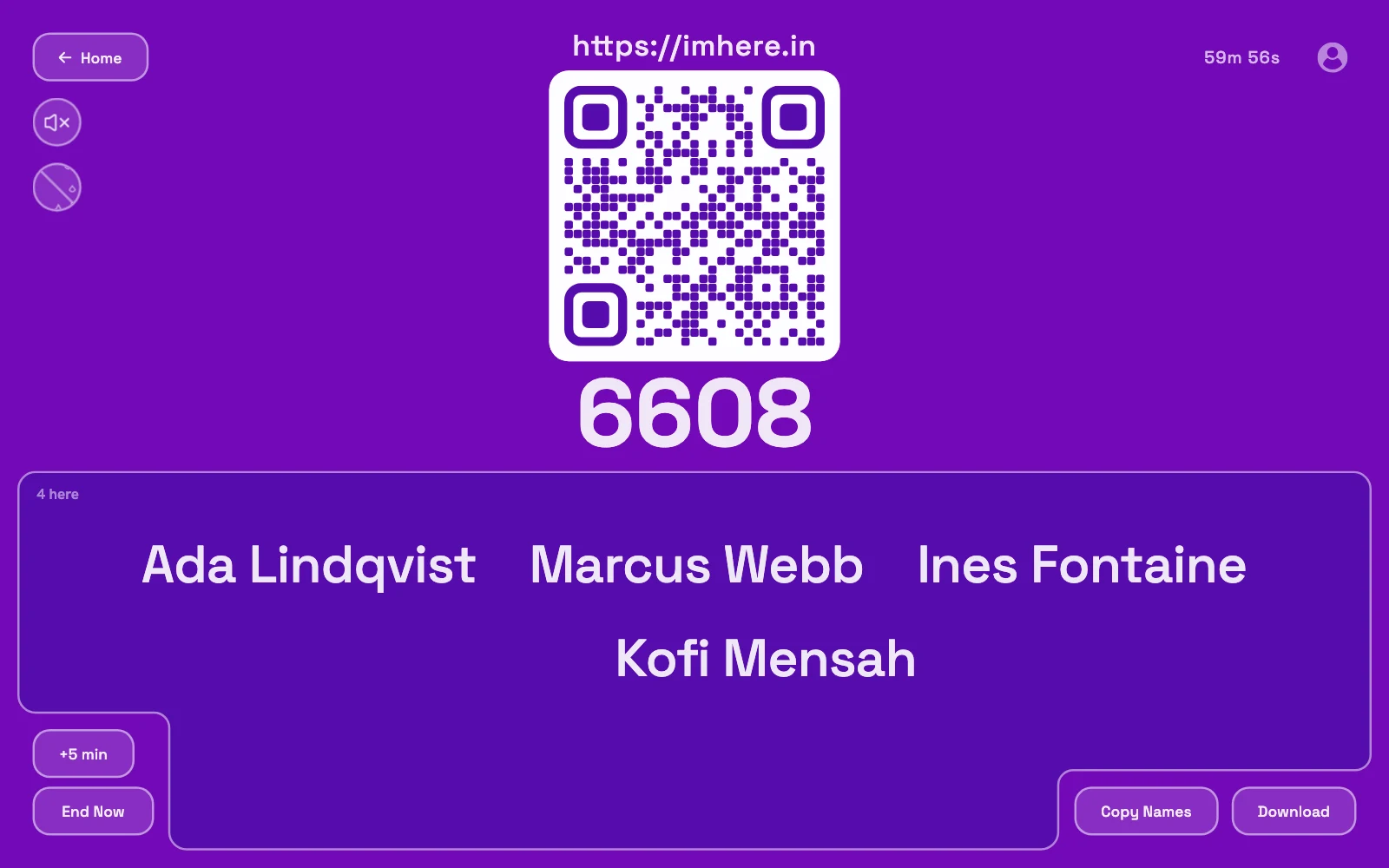
| Texting a photo of the code | A fixed code works from anywhere while it’s up. | The code keeps changing, so by the time a photo arrives it no longer works, and the board scan fails. |
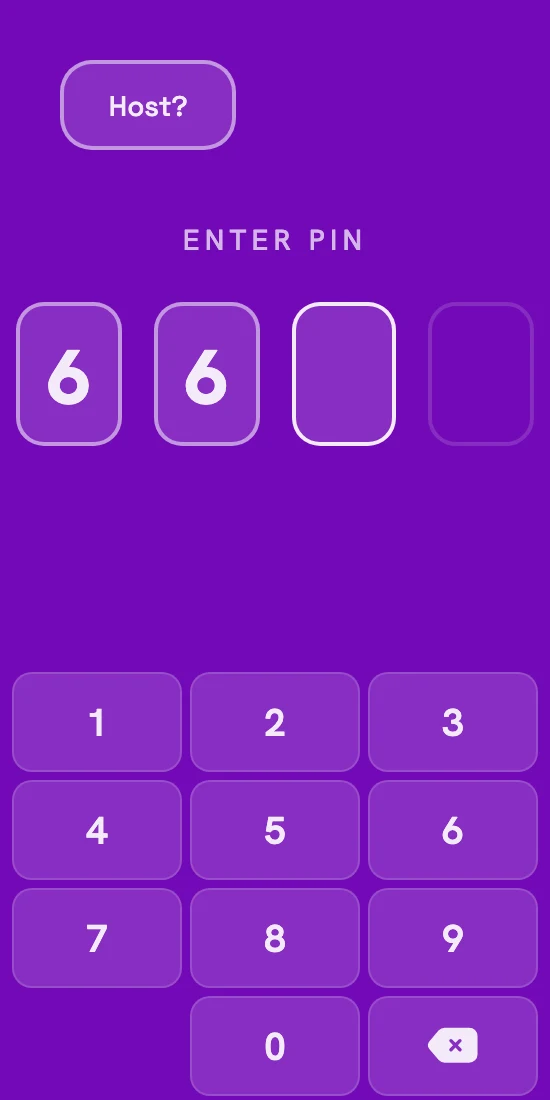
| Checking in from home with the PIN | A form link works from anywhere while it’s open. | There’s no live code to scan, the phone is far from your room, and it’s on another network, so all three checks fail and the name is flagged. |
| Streaming the board on a video call | Not needed, a photo already works. | The board scan passes because it’s the live code. Location and network still fail unless they’re nearby. |
Every check has blind spots, so a failed check is a reason to take a closer look, not proof that someone was absent. That’s why a room can use all three.
The three checks
You choose which checks a room uses when you open it. Each one looks at something different, so they make up for each other’s blind spots.
-
Scanned the live board
The QR code on your screen changes every three seconds. Each version is built from a secret that only your screen and our server know. People scan it to check in, or scan it after typing the PIN.
- Catches
- Photos and screenshots of the code, and a PIN passed around.
- Blind spots
- Someone in the room can share the live code on a call. People whose camera can’t read the code, because of glare or a far seat, fail it even though they’re there.
-
In the right place
Each phone’s location is compared with where you opened the room. The browser asks for permission first, and saying no doesn’t stop anyone from checking in.
- Catches
- Check-ins from home, another building, or across town.
- Blind spots
- Someone just outside the door, and apps that fake a location. Indoor GPS can drift, and a phone that won’t share its location counts as unchecked, not failed.
-
On the same network
Each phone’s internet connection is compared with your computer’s. Nobody gets asked anything.
- Catches
- Phones at home, or anywhere off the venue’s network.
- Blind spots
- People in the room on mobile data get flagged, and anyone elsewhere on the same network passes.
Flagged, not locked out
Nobody gets turned away. A phone that doesn’t pass still checks in, and the name shows up on your list dimmed and marked not verified. Tap it to see which checks failed and why.
The board also keeps a count of verified and not verified names, so you can see at a glance how many to look into.
You make the call
Someone on mobile data, or whose camera won't scan, might be sitting right in front of you. You can mark them verified yourself, or add a name by hand for someone without a phone. Names you add count as verified.
Every check is in the download
Download the room as a CSV and every name comes with its check-in time, the result of each check, the overall verdict, and anything you marked by hand.
Trainings, CE sessions and conferences
When attendance earns something, like continuing education hours or a certificate, the list needs to hold up later. The CSV is that record: names, check-in times, and what each check found. It tracks phones, not IDs, so if whoever grants the credit needs a signature or an ID, use it alongside those.
If credit depends on staying for the whole session, open a second short room near the end and compare the two lists. If you paste your registration list in as the roster, each room’s review page shows who’s missing.
At big venues: Many people stay on mobile data, and they’ll fail the network check even while they’re in the room. Use the board scan and location, and turn network off.
What it can’t stop
Verify presence is built to catch check-ins from people who aren’t there. It can’t tell who’s holding the phone, so a few things still get through:
- Someone in the room checking in a second name from another phone or a private browser tab. A quick head count against the count on the board catches it.
- A friend relaying the live code over a video call to someone close enough to pass location and network.
- Apps that fake a phone’s location, although the board scan still needs the live code.
Two low-tech habits cover most of the rest. Spin the name wheel on the board and ask whoever it lands on to raise a hand. Or add a check-in question only people in the room can answer, like a word you say out loud when you open the room. Answers show on your screen, never on the board.
FAQ
- Can someone still check in if they fail a check?
- Yes. Nobody gets turned away. Their name shows up dimmed and marked not verified, and you can mark them verified yourself. That matters for people whose camera won't scan, or who are on mobile data in the room.
- Does Im Here! keep anyone’s location?
- No. A phone's location is compared once with where you opened the room, then thrown away. You only see the result, plus a rounded distance when it fails. The network check works the same way: the phone's IP address is compared, not kept.
- Does it work for conferences and large events?
- Yes. A room holds up to 1,000 people. At big venues many phones stay on mobile data, so use the board scan and location and leave the network check off.
- Is the record good enough for CE credit or certificates?
- The download lists every name with its check-in time and the result of each check, which is more than a paper sign-in sheet shows. Whether that's enough is up to whoever grants the credit. If they also want proof that people stayed, open a second room near the end.
- Do people need an app or an account?
- No. They scan the code with their phone camera, or type the PIN at imhere.in, and add their name. You don't need an account to host either.
- Is it free?
- Yes, including Verify presence.
Also: QR code attendance, the paper sign-in sheet, Google Forms, Top Hat